

When you want a hearty dinner that tastes like it has been simmering all day, a stovetop beef stew is hard to beat. This version keeps things simple with 15 minutes of prep, everyday ingredients, and no wine at all.
Instead of relying on wine for depth, the stew gets its rich flavor from well-browned beef, aromatic vegetables, tomato paste, herbs, and a savory beef broth. Everything cooks together in one pot, giving you tender beef and vegetables in a thick, comforting sauce.
It is the kind of meal that works especially well on a chilly evening when you want something filling without making dinner complicated. Serve it with crusty bread, biscuits, or simply enjoy it by itself.
The best part? You do not need a slow cooker or oven. This easy beef stew comes together right on the stovetop.
Why You’ll Love This Stovetop Beef Stew
This recipe is designed for a practical weeknight dinner, but it still has the cozy feel of a classic homemade stew.
The prep takes about 15 minutes, while the longer cooking time allows the beef to become tender and gives the broth time to develop a deeper flavor.
A few things make this recipe especially convenient:
- No wine: You can make a rich, flavorful stew without adding red or white wine.
- One-pot cooking: The beef, vegetables, and broth all come together in the same Dutch oven or heavy-bottomed pot.
- Simple ingredients: Most of what you need can be found at an ordinary U.S. grocery store.
- Make-ahead friendly: The flavors can be even better after the stew has had time to rest and cool.
- Comfort-food appeal: Tender beef, potatoes, carrots, and a savory gravy-style broth make this a satisfying meal.

The chuck roast is a particularly useful cut for stew because it has enough connective tissue and fat to become tender during a longer simmer.
If you prefer, you can purchase beef already labeled as stew meat. Cutting the pieces yourself gives you more control over their size, which helps them cook more evenly.
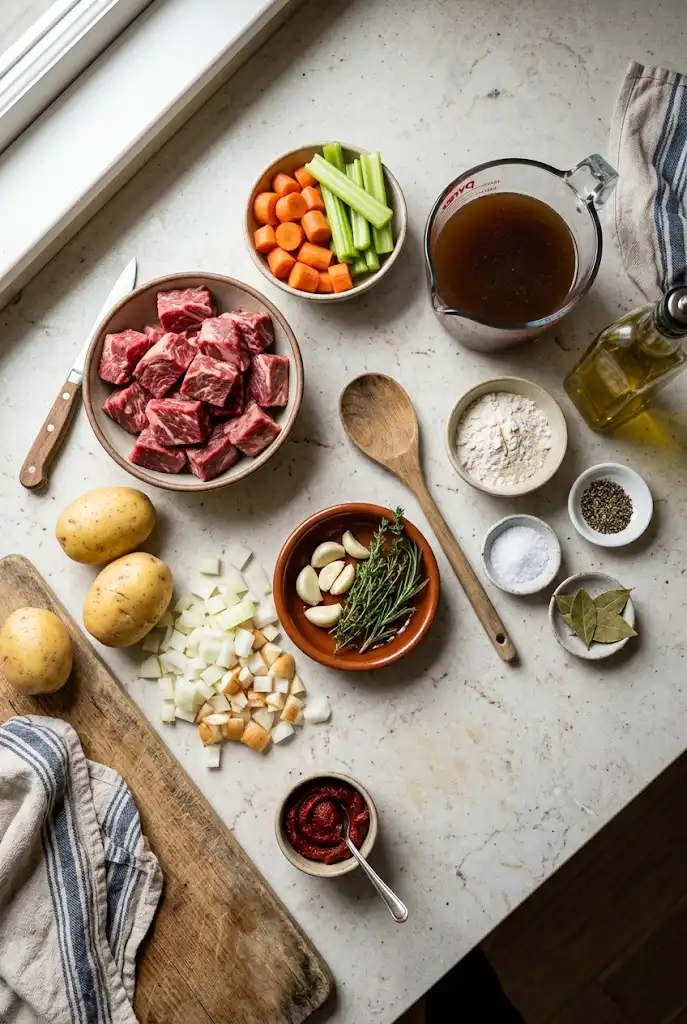
How to Make Stovetop Beef Stew Without Wine
1. Prep the Beef and Vegetables
Pat the beef pieces dry with paper towels. Season them with about 1 teaspoon of the salt and half of the black pepper.
Cut the onion, carrots, potatoes, and celery before you begin cooking. Having everything ready makes the process much smoother once the pot is hot.
Try to cut the vegetables into relatively similar-sized pieces. They do not have to be perfectly uniform, but pieces that are close in size will cook more evenly.
2. Brown the Beef
Heat the olive oil in a large Dutch oven or heavy-bottomed pot over medium-high heat.
Add the beef in a single layer, working in batches if necessary. Avoid crowding the pot because too much beef at once can cause it to steam rather than brown.
Cook the beef for several minutes, turning the pieces so multiple sides develop a deep brown crust.
You are not trying to cook the beef completely at this stage. The goal is to build color and flavor on the outside.
Transfer the browned beef to a plate and repeat with the remaining pieces if needed.
3. Cook the Aromatics
Reduce the heat to medium and add the diced onion to the same pot.
Cook for about 3 to 4 minutes, stirring occasionally, until the onion begins to soften. Add the minced garlic and cook briefly until fragrant.
Stir in the tomato paste and cook for another minute.
The tomato paste adds savory depth and helps create a richer-looking broth without needing wine.
4. Make the Wine-Free Stew Base
Sprinkle the flour over the onion mixture and stir well so the flour is incorporated.
Slowly pour in the beef broth while scraping the bottom of the pot with a wooden spoon.
Those browned bits left behind by the beef are full of flavor, so take a moment to loosen them from the bottom.
Add the Worcestershire sauce, thyme, rosemary, bay leaves, and remaining salt and pepper.
Return the browned beef and any juices from the plate to the pot.
5. Add the Vegetables
Add the carrots, potatoes, and celery.
Bring the liquid to a gentle boil, then reduce the heat to low so the stew maintains a gentle simmer.
Cover the pot partially and cook for about 1½ to 2 hours, or until the beef is tender and the vegetables are cooked through.
Check the pot occasionally and give it a gentle stir. If the stew is simmering too aggressively, reduce the heat.
6. Finish and Serve
When the beef is tender, remove the bay leaves.
Taste the broth and adjust the salt and pepper if needed.
If you prefer a slightly thicker stew, leave the pot uncovered for the final 10 to 15 minutes of cooking so some of the liquid can reduce.
Sprinkle with fresh parsley just before serving.
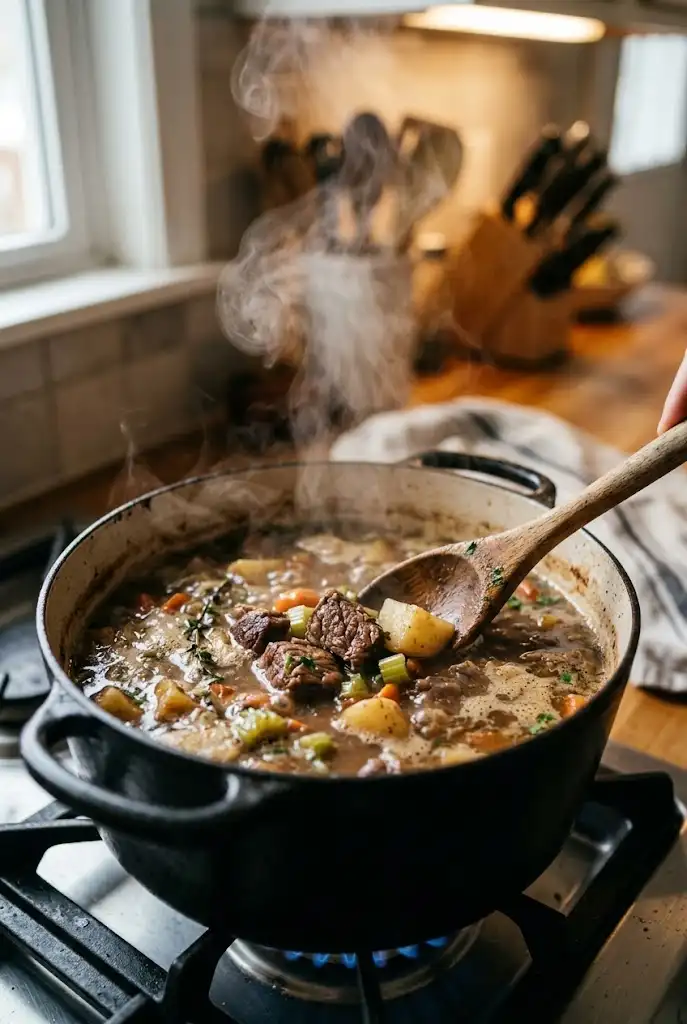
How to Tell When the Beef Is Tender
The cooking time can vary depending on the size of your beef pieces and the temperature of your simmer.
The most useful test is texture rather than the clock.
After the stew has simmered for a while, use a fork to gently test one of the larger pieces of beef. It should be tender enough to pierce easily.
If the beef is still chewy or resistant, continue simmering and check it again later.
Keeping the heat gentle is important. A rapid boil can make the cooking liquid evaporate too quickly and does not necessarily make the beef tender faster.
Tips for the Best Beef Stew
Don’t Skip Browning the Beef
Browning creates a flavorful exterior and leaves browned bits in the bottom of the pot that can become part of the stew’s base.
If your pot is small, brown the beef in batches rather than overcrowding it.
Cut the Vegetables Generously
Small vegetable pieces can become overly soft during a long simmer. Chunkier carrots and potatoes are better suited to this style of stew.
Keep the Simmer Gentle
Once the stew reaches a boil, turn the heat down. You want a gentle simmer rather than vigorous bubbling.
Taste Before Serving
Beef broth, Worcestershire sauce, and tomato paste can all contribute salt and savory flavor. Taste the finished stew before adding more seasoning.
Give It Time
Beef stew is not a recipe to rush after the ingredients are in the pot. The initial prep is quick, but the simmering stage is what helps develop the tender texture and rich broth.
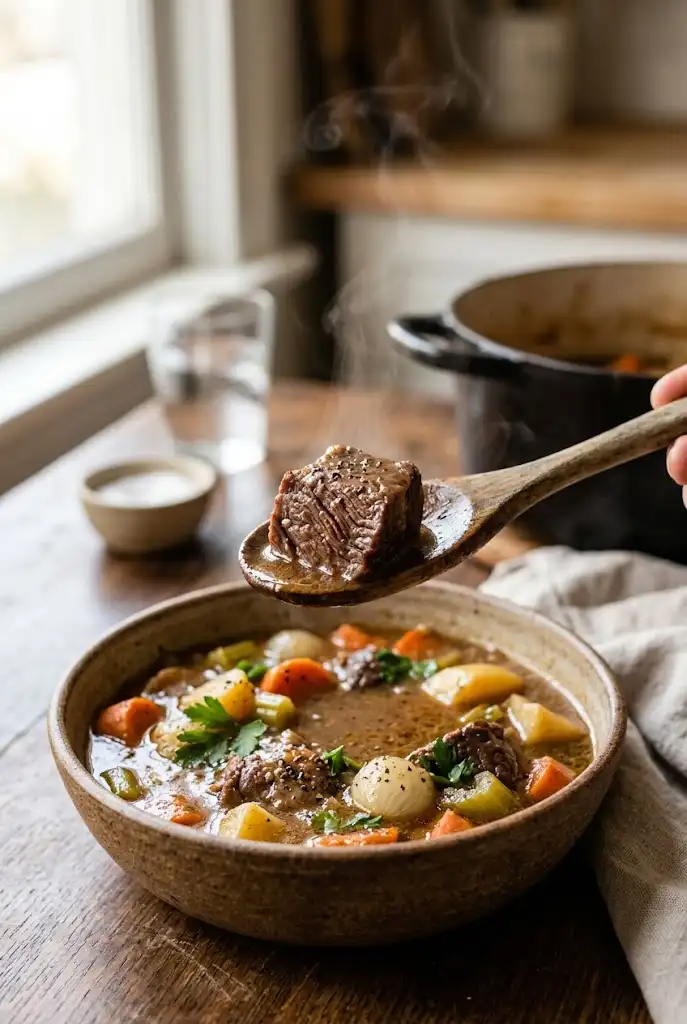
Easy Substitutions
This recipe is flexible enough to adapt to what you already have.
Beef chuck: Stew meat can be used instead. If using another cut, choose beef that is suitable for slow braising rather than a very lean cut intended for quick cooking.
Yukon Gold potatoes: Russet potatoes can work, although they may have a softer texture as they cook.
Fresh herbs: If you have fresh thyme or rosemary, you can use them instead of dried herbs. The amount can be adjusted according to taste.
Low-sodium broth: Regular beef broth can be used, but you may want to reduce the added salt and season after the stew has cooked.
Worcestershire sauce: It contributes savory depth, but the stew can still be made without it if needed. Taste the finished broth and adjust the seasoning accordingly.
Can You Make Beef Stew Without Wine?
Absolutely. Wine is one traditional way to add acidity and depth to certain beef stews, but it is not essential for making a satisfying stovetop version.
This recipe builds flavor through several other steps: browning the beef, cooking the aromatics, using tomato paste, adding savory beef broth, and allowing everything to simmer together.
The result is a hearty stew with a rich, savory character without wine.
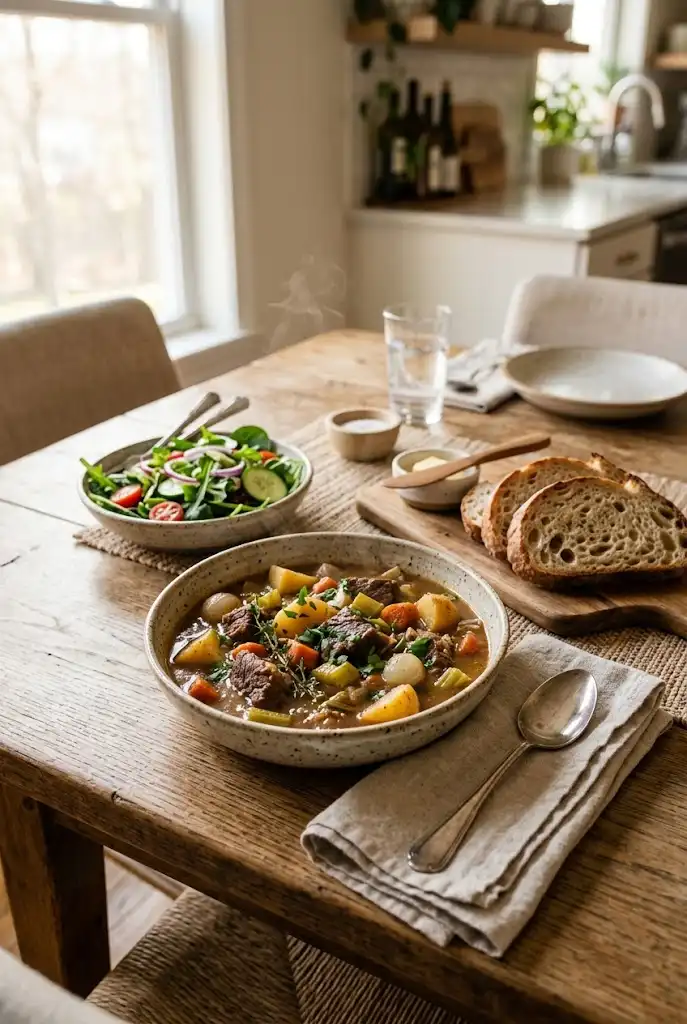
What to Serve With Beef Stew
Because the stew already contains beef and vegetables, it can easily stand on its own as a complete-feeling meal.
For something extra alongside it, try:
- Crusty French bread
- Warm dinner rolls
- Buttermilk biscuits
- Simple green salad
- Steamed green beans
- Roasted vegetables
A piece of crusty bread is particularly useful for soaking up the thick broth.
Storage and Reheating
Allow leftover stew to cool appropriately before transferring it to an airtight container and refrigerating it.
For best quality, enjoy refrigerated leftovers within a few days.
To reheat, warm the stew gently in a saucepan over medium-low heat, stirring occasionally. Add a small splash of beef broth or water if the stew has thickened considerably in the refrigerator.
You can also reheat individual portions in the microwave using a microwave-safe bowl. Cover loosely and heat in intervals, stirring between them.
The stew may thicken as it cools, so do not be surprised if the refrigerated version looks more like a thick gravy than the freshly cooked stew.
Make-Ahead Tips
Beef stew is a convenient make-ahead dinner because it can be prepared in advance and reheated when needed.
If you’re serving it for a gathering or family dinner, make the stew earlier in the day and reheat it gently before serving.
You may need to loosen the broth with a little additional beef broth or water as it reheats.
For the best texture, avoid reheating it at an extremely high temperature.
Common Mistakes to Avoid
Crowding the pot: Too much beef at once makes browning difficult. Work in batches if needed.
Skipping the browning step: You can technically cook the beef without browning it first, but the finished stew will miss some of the flavor developed during browning.
Boiling too hard: Keep the stew at a gentle simmer once the liquid begins bubbling.
Cutting vegetables too small: Smaller pieces can become overly soft during the long cooking time.
Adding too much salt early: Broth and Worcestershire sauce can already contain salt. Taste toward the end and adjust.
Expecting the stew to be done in 15 minutes: The 15-minute figure refers to prep. The beef still needs time to simmer until tender.
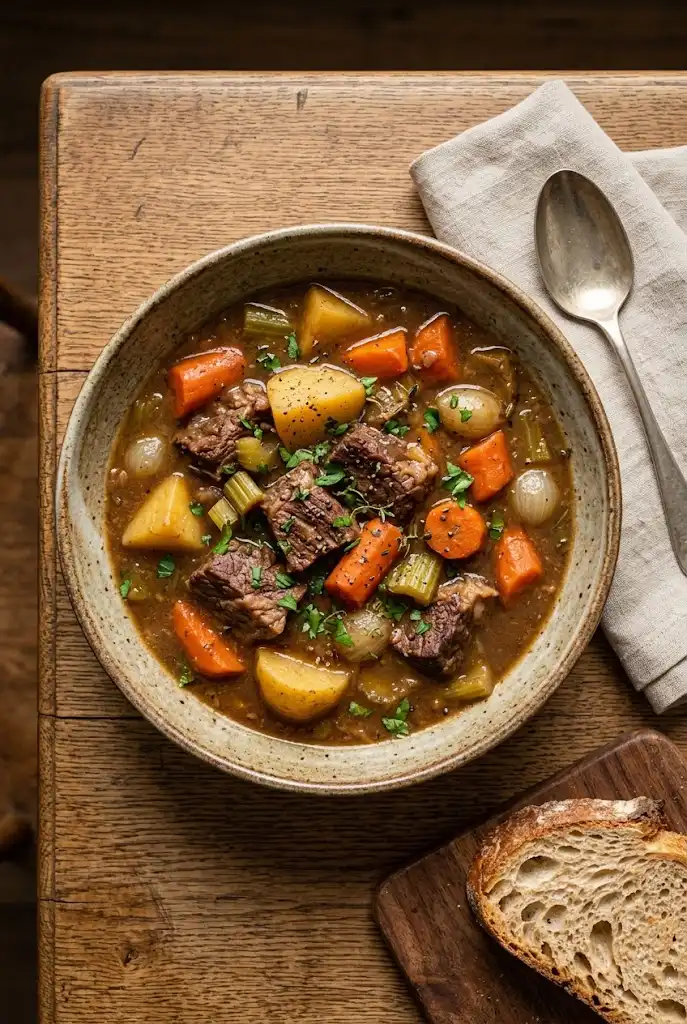
Stovetop Beef Stew Without Wine
A hearty, comforting beef stew made on the stovetop with well-browned beef, vegetables, tomato paste, herbs, and savory beef broth—without wine.
Why You’ll Love It
Build rich, savory flavor without adding red or white wine.
Cook the beef, vegetables, and broth together in one Dutch oven or heavy-bottomed pot.
Uses familiar ingredients that are easy to find at an ordinary grocery store.
The stew can be prepared ahead and gently reheated when you’re ready to serve.
Key Ingredients
- Beef chuck roast — cut into generous stew-sized pieces
- Olive oil — for browning the beef
- Yellow onion — diced
- Garlic — minced
- Tomato paste — for savory depth
- Beef broth — the main stew base
- Carrots — peeled and cut into chunks
- Potatoes — cut into generous pieces
- Celery — cut into chunks
- Worcestershire sauce — for additional savory flavor
- Dried thyme — for herbal flavor
- Dried rosemary — for additional depth
- Bay leaves — removed before serving
- Salt and black pepper — to season
- All-purpose flour — to help thicken the stew
Ingredient note: Stew meat can be used instead of chuck roast. Yukon Gold potatoes can also be replaced with Russet potatoes.
Quick Instructions
-
1
Prep the Beef & Vegetables
Pat the beef dry, season it, and prepare the onion, carrots, potatoes, and celery.
-
2
Brown the Beef
Heat olive oil and brown the beef in batches so the pieces develop a deep crust.
-
3
Cook the Aromatics
Soften the onion, add garlic, then stir in the tomato paste and cook briefly.
-
4
Build the Stew Base
Stir in the flour, gradually add beef broth, and scrape up the browned bits from the pot.
-
5
Add Beef & Vegetables
Return the beef and juices to the pot, then add carrots, potatoes, and celery.
-
6
Simmer Until Tender
Reduce to a gentle simmer, partially cover, and cook for about 1½–2 hours.
-
7
Finish & Serve
Remove the bay leaves, adjust seasoning, and reduce uncovered briefly if a thicker stew is desired.
Keep the Simmer Gentle
Once the stew reaches a boil, reduce the heat to maintain a gentle simmer. A rapid boil can evaporate the liquid too quickly and does not make the beef tender faster.
Easy Substitutions
Use stew meat instead of chuck roast, Russet potatoes instead of Yukon Gold, or fresh thyme and rosemary instead of dried herbs. Regular beef broth can also be used with seasoning adjusted to taste.
What to Serve With It
Serve with crusty French bread, warm dinner rolls, buttermilk biscuits, a simple green salad, steamed green beans, or roasted vegetables.
Make It Ahead
Refrigerate leftovers in an airtight container and enjoy within a few days. Reheat gently in a saucepan or microwave. Add a little beef broth or water if the stew has thickened considerably.
Final Note
The 15-minute prep time is only the beginning—the longer gentle simmer is what gives the beef its tender texture and allows the savory broth to develop its rich flavor.