
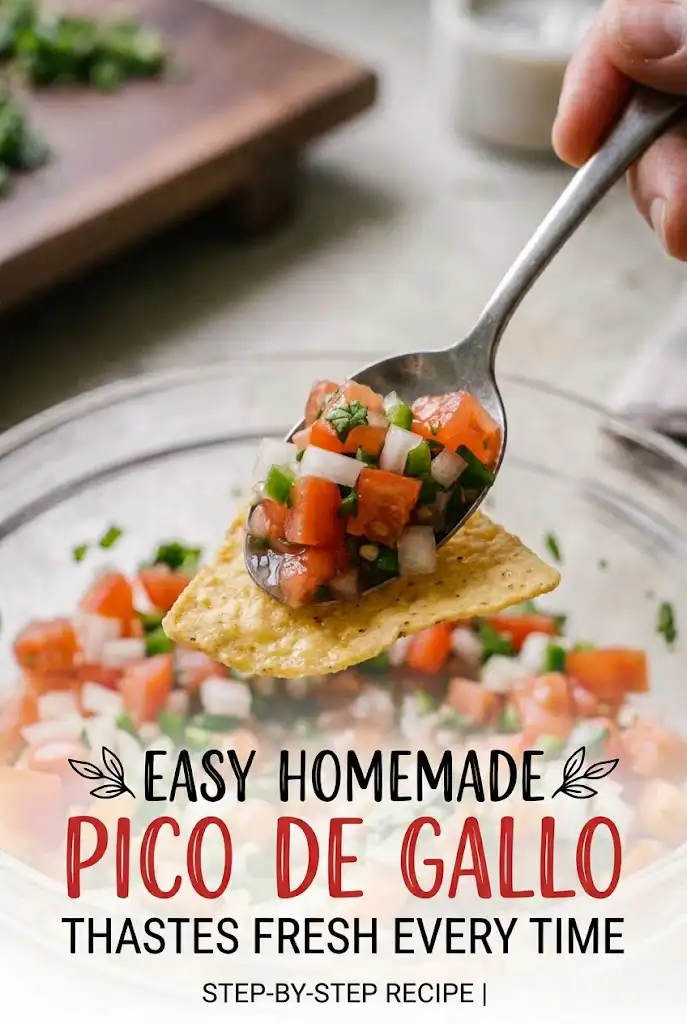
Fresh, juicy tomatoes, crisp onion, bright cilantro, and lime come together in this easy homemade pico de gallo. It takes just a few minutes to prepare and makes a fresh topping for tacos, nachos, grilled meats, quesadillas, or tortilla chips. The key is using ripe tomatoes and chopping the ingredients evenly so every bite has a good balance of flavor and texture.
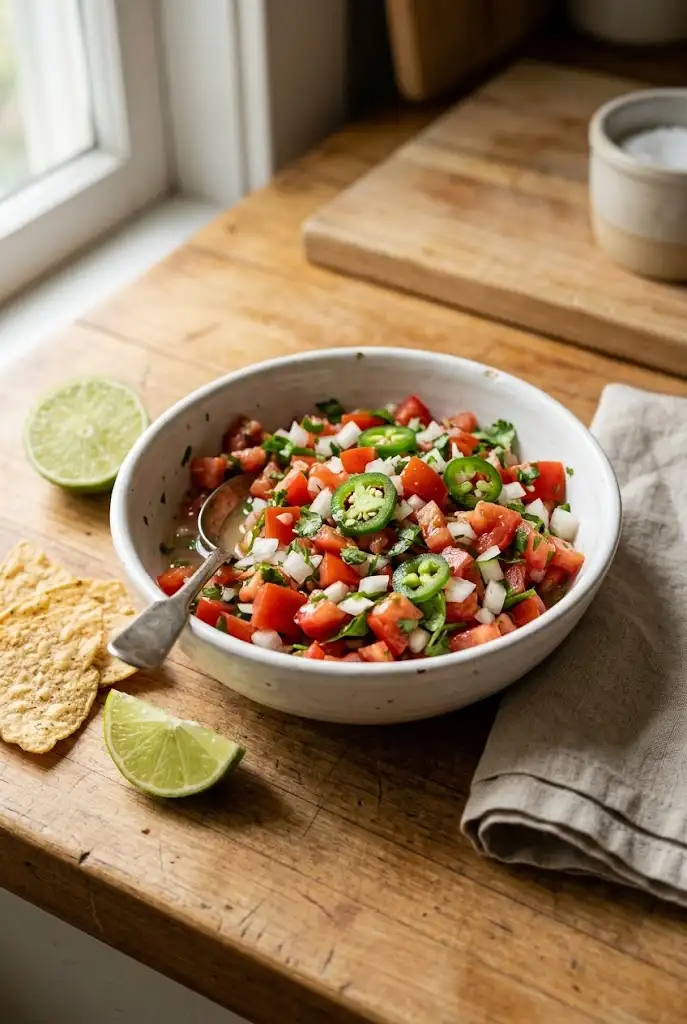
Why You’ll Love This Recipe
- Fresh and bright: Ripe tomatoes, lime juice, and cilantro give the salsa a crisp, fresh flavor.
- Quick to prepare: The ingredients only need to be chopped, mixed, and rested briefly.
- Easy to customize: Adjust the jalapeño, lime, onion, and salt to suit your taste.
- Great for serving: Use it with tortilla chips, tacos, burrito bowls, grilled chicken, or steak.
- No cooking required: Everything comes together in one bowl without turning on the stove or oven.
- Best made fresh: A short resting time lets the flavors blend while keeping the vegetables crisp.
Ingredients
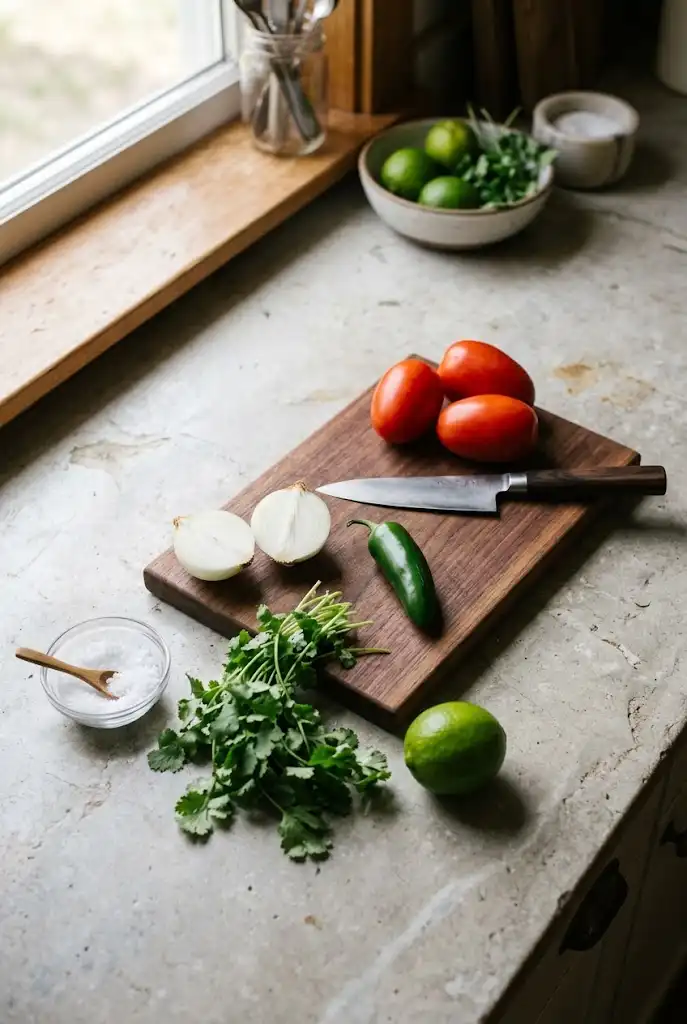
You only need a handful of fresh ingredients to make this simple pico de gallo.
Ingredient Notes
Roma tomatoes: They work well because they’re meaty and have less moisture than many larger tomatoes. Choose ripe tomatoes that feel firm but juicy.
White onion: Its crisp texture and sharper flavor give the salsa its classic bite. Red onion can also be used if preferred.
Jalapeño: Remove the seeds and ribs for a milder pico, or leave some behind if you want more heat.
Cilantro: Use fresh cilantro and chop it fairly finely so it distributes evenly throughout the salsa.
Lime: Fresh lime juice adds acidity and helps balance the sweetness of the tomatoes and sharpness of the onion.
Kosher salt: Start with a small amount and add more after the pico rests for a few minutes.
How to Make Pico de Gallo
Dice the Tomatoes
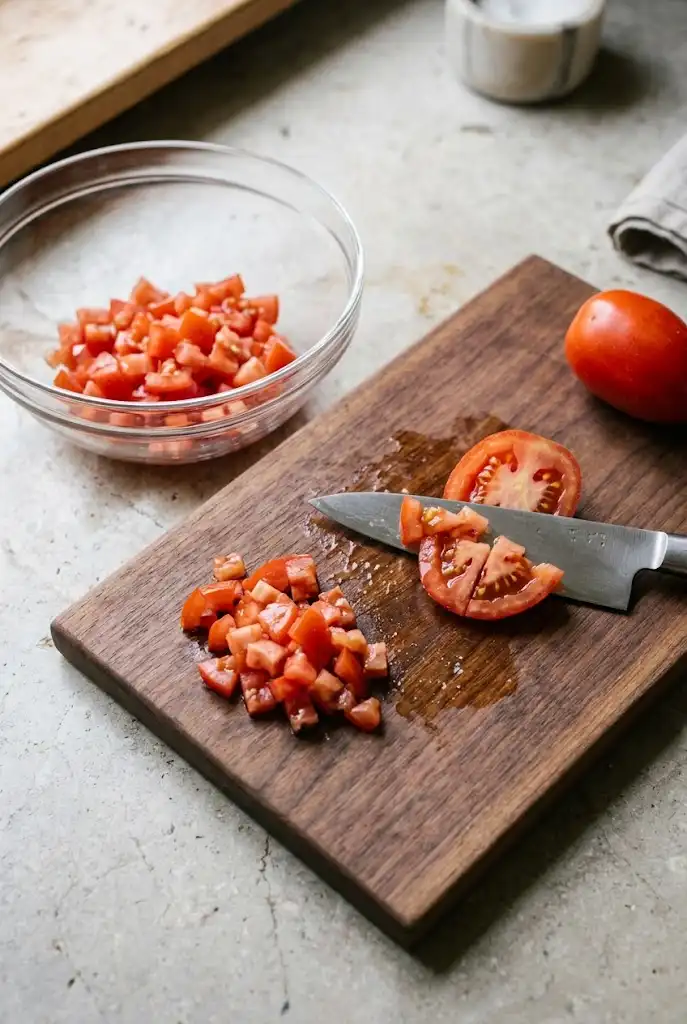
Wash and dry the tomatoes. Cut them into small, fairly even pieces so the pico is easy to scoop and each bite contains a little of every ingredient.
If the tomatoes are especially juicy, gently remove some of the seeds and excess liquid before dicing. Transfer the tomatoes to a medium mixing bowl.
Chop the Onion, Jalapeño, and Cilantro
Finely dice the white onion and jalapeño. Chop the cilantro into small pieces, keeping the cuts relatively fine so the herbs don’t overwhelm the tomatoes.
Add the onion, jalapeño, and cilantro to the bowl with the tomatoes.

Add the Lime Juice and Salt
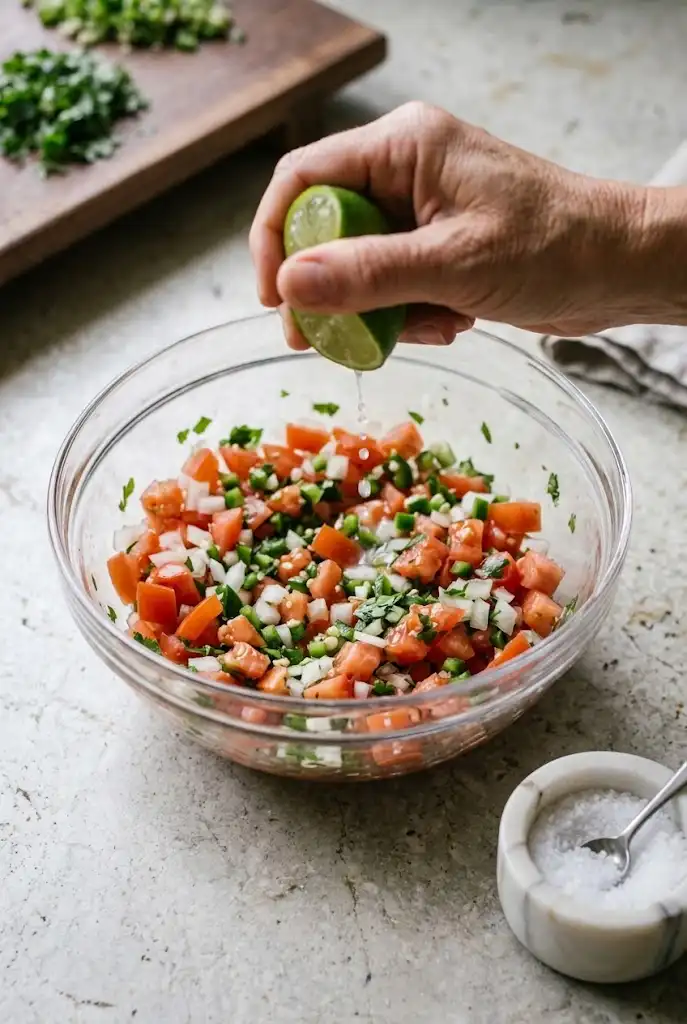
Squeeze the fresh lime juice over the vegetables and sprinkle in the kosher salt. Toss gently with a spoon or spatula until the ingredients are evenly distributed.
The tomatoes should remain intact rather than becoming mashed. Taste a small spoonful and add a little more salt if needed.
Mix and Let It Rest
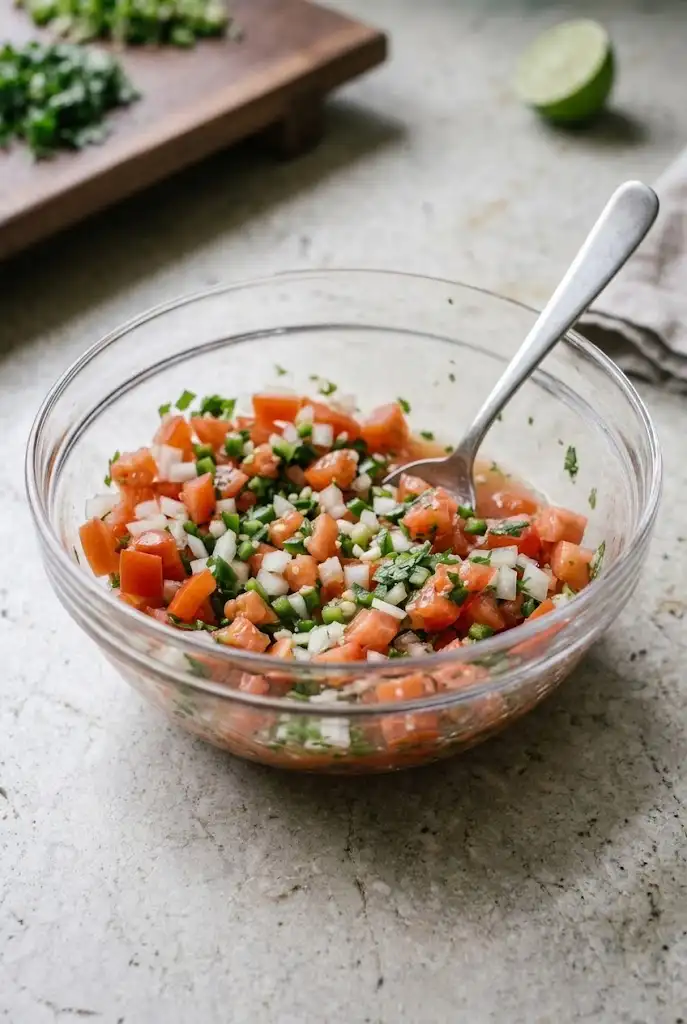
Gently stir everything together until the tomatoes, onion, jalapeño, cilantro, lime juice, and salt are evenly combined.
Let the pico sit for about 10 minutes before serving. This short rest gives the lime and salt time to season the tomatoes and soften the sharpness of the onion slightly while the vegetables retain their fresh texture.
Taste and Serve
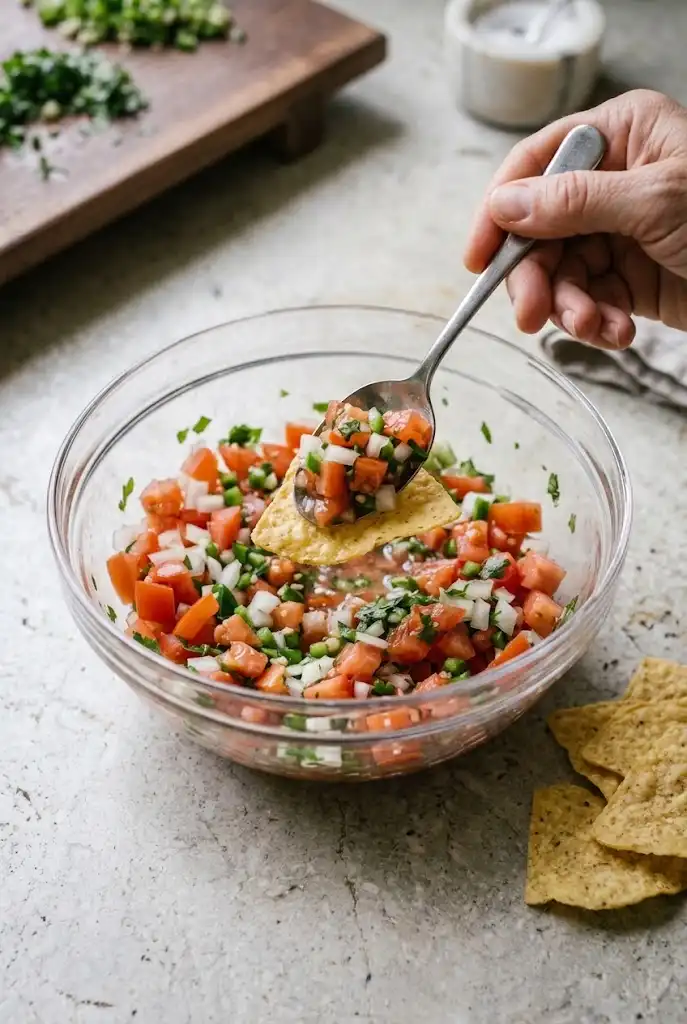
Give the pico one final taste. Add another pinch of salt or a little more lime juice if the tomatoes need more brightness.
Serve immediately with tortilla chips or spoon it over your favorite tacos, grilled meats, or Tex-Mex dishes.
Recipe Tips
- Use ripe but firm tomatoes. Very soft tomatoes can release too much liquid and make the pico watery.
- Keep the cuts small and consistent. Smaller pieces make it easier to get tomato, onion, jalapeño, and cilantro in every bite.
- Control the heat with the jalapeño. Removing the seeds and inner ribs reduces the heat. For a hotter pico, keep some of them.
- Don’t overmix. Stir gently so the tomatoes stay chunky instead of breaking down.
- Let it rest briefly. About 10 minutes is enough to bring the flavors together without sacrificing the crisp texture.
- Season after resting. Tomatoes can vary in sweetness and acidity, so the final salt adjustment is best made after the ingredients have mingled.
Adjusting the Heat
Pico de gallo is easy to make mild or spicy.
For a mild version, remove the jalapeño seeds and inner ribs before finely chopping the pepper. For more heat, leave some seeds and ribs in, or use an additional jalapeño.
If you accidentally make the pico hotter than intended, increasing the amount of tomatoes and onion can help spread out the heat.
Variations and Substitutions
Roma tomatoes: Vine-ripened tomatoes can be used instead. Choose firm, ripe tomatoes and drain excess liquid if needed.
White onion: Red onion is a good alternative when you prefer a slightly different color and flavor.
Jalapeño: Serrano peppers can be used for a noticeably hotter salsa.
Cilantro: If you don’t enjoy cilantro, you can leave it out, although the finished pico will have a different flavor.
Lime: Fresh lemon juice can work in a pinch, but lime gives the more traditional flavor profile.
Add avocado: For a heartier variation, fold diced avocado into the pico immediately before serving. Because avocado softens quickly, this version is best eaten right away.
What to Serve With Pico de Gallo
Pico de gallo works as both a dip and a fresh topping. Try it with:
- Tortilla chips
- Chicken, beef, or shrimp tacos
- Burrito bowls
- Quesadillas
- Grilled chicken
- Grilled steak
- Scrambled eggs or breakfast tacos
Storage and Reheating
Refrigerator
Store leftover pico de gallo in an airtight container and refrigerate it promptly. For the best texture and flavor, use it within 2–3 days.
The tomatoes will continue releasing liquid as the pico sits, so give it a gentle stir before serving. If it becomes watery, spoon off some of the excess liquid.
Freezer
Freezing isn’t recommended for pico de gallo. The tomatoes and other fresh vegetables become soft and watery after thawing, which changes the crisp texture that makes fresh pico appealing.
Reheating
Pico de gallo is served cold or at cool room temperature, so reheating isn’t necessary.
FRESH & EASY
Easy Homemade Pico de Gallo
Fresh, juicy tomatoes, crisp onion, bright cilantro, and lime come together in this simple homemade pico de gallo. It takes just a few minutes to prepare and makes a fresh topping for tacos, nachos, grilled meats, quesadillas, or tortilla chips.
Why You’ll Love It
Ripe tomatoes, lime juice, and cilantro create a crisp, fresh flavor.
Simply chop, mix, and let the ingredients rest briefly before serving.
Adjust the jalapeño, lime, onion, and salt to suit your taste.
Everything comes together in one bowl without using the stove or oven.
Ingredients
- Roma tomatoes — ripe but firm
- White onion — finely diced
- Jalapeño — seeds and ribs adjusted to taste
- Fresh cilantro — finely chopped
- Fresh lime — juiced
- Kosher salt — to taste
Quick Instructions
-
1
Dice the Tomatoes
Wash and dry the tomatoes, then cut them into small, even pieces. Remove some excess seeds and liquid if needed.
-
2
Chop the Vegetables
Finely dice the onion and jalapeño, then finely chop the cilantro.
-
3
Combine
Add the onion, jalapeño, and cilantro to the tomatoes.
-
4
Add Lime & Salt
Squeeze in fresh lime juice and sprinkle with kosher salt.
-
5
Mix Gently
Toss everything together without mashing the tomatoes.
-
6
Rest & Taste
Let the pico rest for about 10 minutes, then adjust the salt or lime if needed.
-
7
Serve
Serve immediately with tortilla chips, tacos, grilled meats, or Tex-Mex dishes.
Use ripe but firm tomatoes and keep all the ingredients small and evenly chopped. This helps every bite have a good balance while keeping the pico fresh and chunky.
Variations
Swap Roma tomatoes for firm vine-ripened tomatoes or white onion for red onion. Serrano peppers can replace jalapeños for more heat. For a heartier version, fold in diced avocado just before serving.
Serving Ideas
Serve with tortilla chips, chicken, beef or shrimp tacos, burrito bowls, quesadillas, grilled chicken, grilled steak, scrambled eggs, or breakfast tacos.
Storage
Store leftovers in an airtight container in the refrigerator and use within 2–3 days for the best texture and flavor. Stir gently before serving and spoon off excess liquid if needed.
Pico de gallo is best served fresh. Freezing is not recommended because the vegetables can become soft and watery after thawing, and reheating is unnecessary.